

Artyc transforms its shippers into a scalable HaaS model with Hardfin
Accelerated outreach
Notifications drive rapid customer responses
Faster insights
Dashboards unlock fleet information
Hours saved
Integrated operations reduce spreadsheets
Visibility into renewals
Proactive alerts turn projects into growth
Confidence in traceability
Bulletproof audit trail for compliance
“Traditional ERPs weren’t designed for hardware-as-a-service. Hardfin offered us a great solution. The platform means we can scale instead of patching things together.”
— Chris White,
VP of Manufacturing & Product Operations
Artyc at a glance
Company context
- Founded: 2021
- Headquarters: Fremont, California
- Company size: 20
- Key customers: hospital networks, clinical sites, academic medical centers
- Website: shipartyc.com
Hardware-as-a-service (HaaS) context
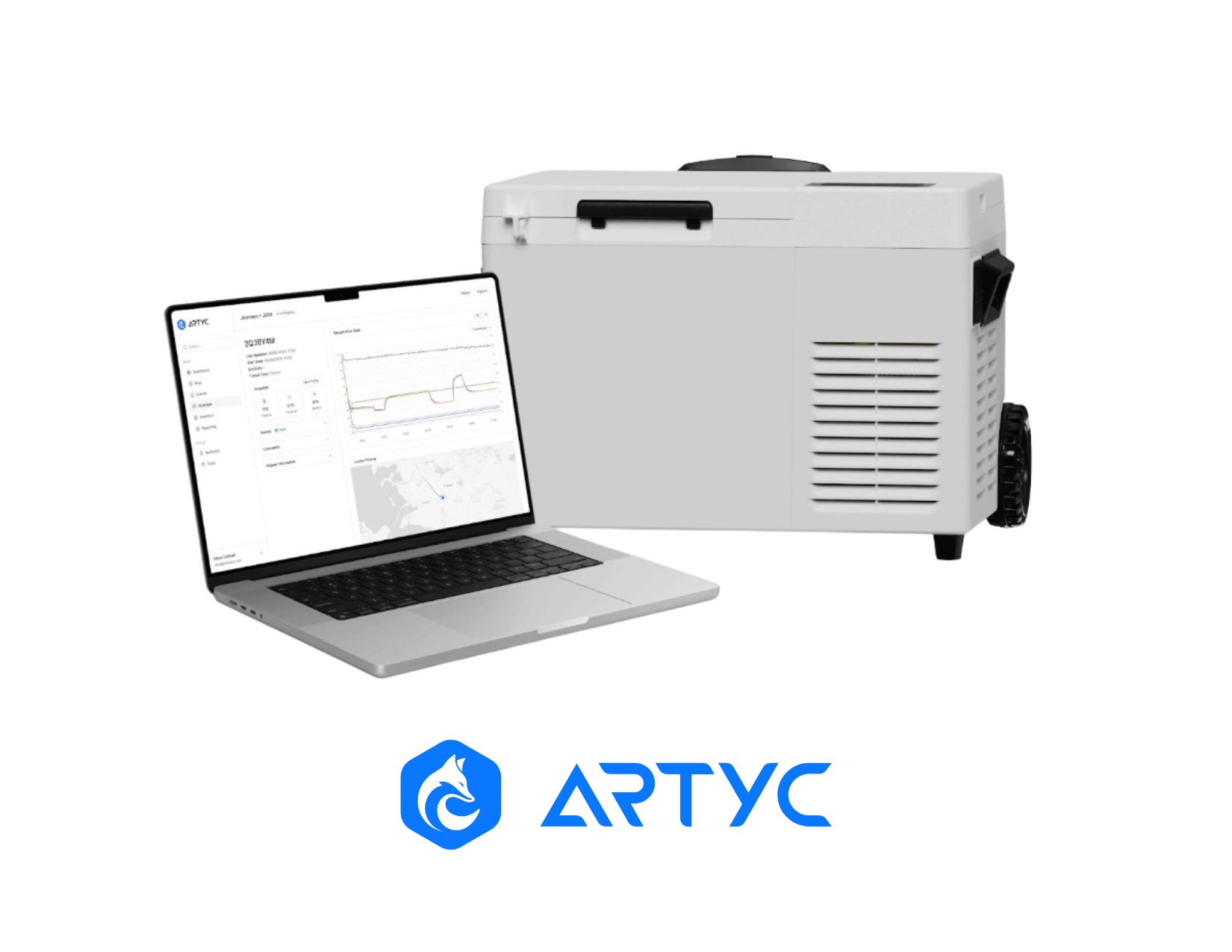
- Product offering: IoT-enabled, battery-powered coolers for healthcare, life sciences, and logistics
- Business model: Cold-chain-as-a-service
- Revenue model: monthly recurring
About Artyc
Artyc is tackling one of the most stubborn problems in healthcare logistics: cold chain waste. The company designs and manufactures battery-powered, precision cooling systems purpose-built for transporting pharmaceuticals, vaccines, and clinical materials. These reusable units deliver precise temperature control without dry ice, while capturing real-time tracking and audit trails.
“Our mission,” explains Chris White, VP of Manufacturing & Product Operations, “is to replace single-use coolers with reusable systems that streamline logistics, cut waste, and reduce reliance on practices that contribute to climate impact.”
The stakes are high. “If you can’t prove that a shipment remained in temperature range, or if a delay causes temperature drift, the product is wasted.” Packaging from single-use coolers ends up in landfills. Dry ice leaves a heavy carbon footprint. Artyc’s products address all three challenges, preserving product integrity while cutting down on single-use waste.
Hardfin equips Artyc to scale by design (not by scramble)
When Chris joined Artyc as VP of Manufacturing & Product Operations, the company was just bringing its hardware-as-a-service model to life. The product was in development, and support systems had not yet been built. The Operations team was only beginning to take shape.
As an Ops leader, Chris has watched many startups bolt on systems reactively and pay the price later in inefficiency and rework. “It’s just what happens when teams scale without asset visibility,” he explains; “units go missing, invoices slip, service events get missed. You end up spending half your time reconciling data across spreadsheets instead of running the business.”
Chris credits Artyc’s CEO, Hannah Sieber, with taking a more deliberate approach. “Hiring operations leadership early was unusual for a company our size,” he reflects. “But it allowed us to design the right foundation from day one, instead of waiting until scale forced us to untangle a mess.”
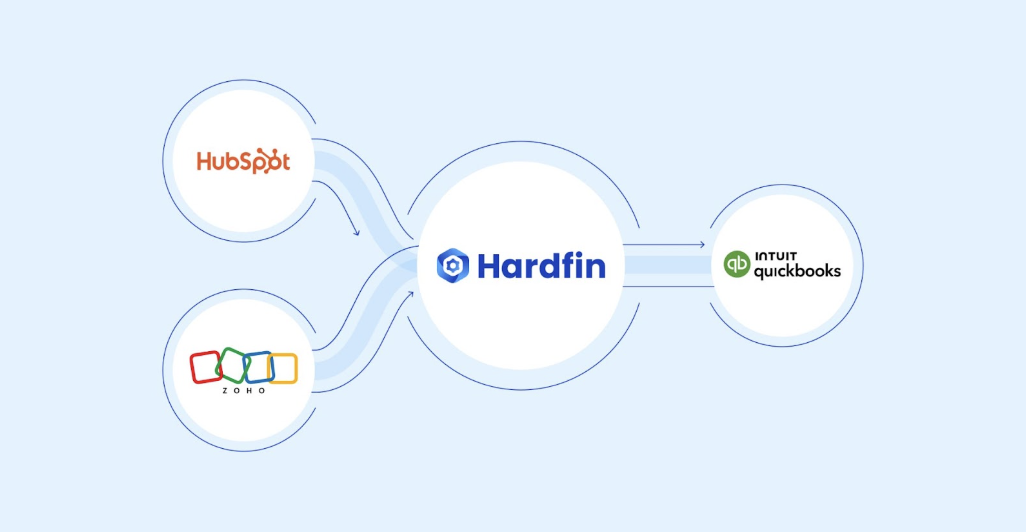
That foundation took shape as a core operating stack connecting CRM, contract management, asset intelligence, and accounting:
- HubSpot for lead management and quoting
- Zoho for contract execution and order flow
- Hardfin for asset, lifecycle, and project management
- QuickBooks Online for accounting and reconciliation
“Hardfin is where everything converges,” Chris explains. In practice, it’s where customers and assets are tied together: each contract links directly to the units in the field, with full histories and support attached. Other tools feed data to the Hardfin “backbone.” With all the information centralized in Hardfin, the team has dashboards and reports that give them real-time visibility into how assets are performing across the fleet.
Adopting Hardfin early wasn’t optional; it was essential to scaling cleanly. “When we decided to bring in Hardfin, nothing was on fire yet,” Chris recalls. “But we could see the smoke. We knew that if we waited six more months, we’d be in cleanup mode instead of growth mode. It’s a lot easier to scale a good system than to fix a broken one.”
Traditional ERPs weren’t designed for hardware-as-a-service. “Hardfin offered us a great solution. The platform means we can scale instead of patching things together, and without layering on waste or overhead. Instead of rebuilding later, we scaled directly into the system we knew we’d need.”
“When we decided to bring in Hardfin, nothing was on fire yet. But we could see the smoke. We knew that if we waited six more months, we’d be in cleanup mode instead of growth mode. It’s a lot easier to scale a good system than to fix a broken one.”
Hardfin replaces spreadsheets with end-to-end asset intelligence
The first tangible benefit of Hardfin was visibility. As Artyc’s units shipped out to customers, knowing exactly where each unit was—and in what condition—was critical.
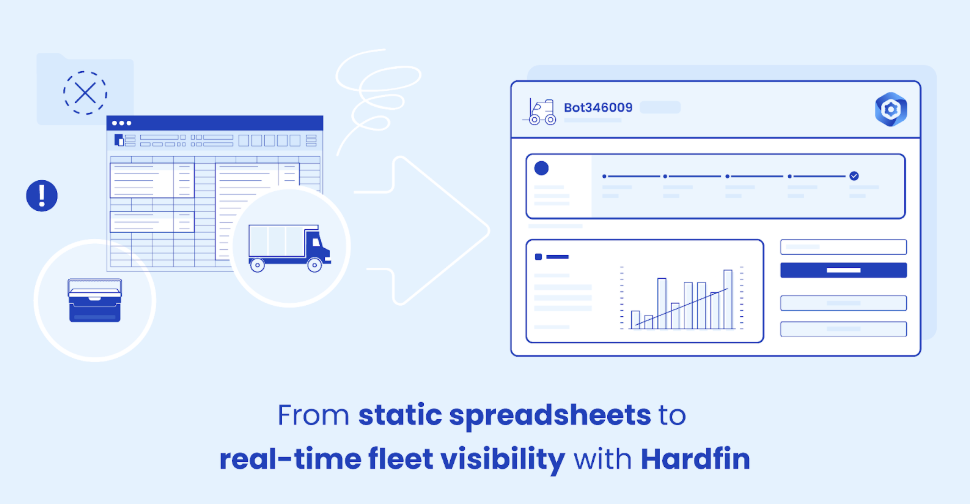
“We’ve got assets scattered across the country, and even overseas,” Chris explains. “With a traditional ERP, once it ships, it’s gone, and you’re left managing a spreadsheet. But with Hardfin, every cooler stays tied to a project. I can see where it is in real time—whether it’s in inventory or out with a customer—and what its status is. Anyone in the company can get what they need: search by serial number, filter by location, roll up by customer or project, drill down three layers. That’s virtually instant time-to-insight. It’s become part of our rhythm: our CEO looks at the dashboards weekly, I use it in regular updates, and the team doesn’t need to ask for answers. It’s all right there.”
The dashboard delivers far more than basic location tracking. Every unit is tied to a lease agreement, so Ops can see not just where it is, but who it’s with and under what terms. Hardfin also captures each cooler’s operational status, movement history, and the metadata tied to it: serial number, firmware version, project assignments, maintenance history. “I can see whether a unit’s ever been repaired, if it was sent to inspection because of damage, or if it was swapped into a new lease,” Chris explains. “That level of traceability is critical. You can see not just where the asset is today, but the entire journey it’s been on.”
That history matters. For Ops, it highlights repeat issues that may signal when a unit should be retired or refurbished. For Finance, it provides the cost-to-serve data needed to measure unit-level profitability. For customers, it builds confidence that every cooler has a verified record. And for compliance, it ensures Artyc can demonstrate chain-of-custody in a regulated industry. The result is a foundation for smarter planning, more accurate forecasting, and faster answers across the business.
Most HaaS companies struggle to achieve proactive control. But because Hardfin pulls updates automatically from other systems, the information stays updated without manual reconciliation. Together, those real-time dashboards, contract details, and asset histories give Artyc complete control over every aspect of the business. “The customer-facing picture is calm and clear,” Chris says. “Behind the scenes, there’s still plenty of motion—tracking numbers logged, statuses updated, units moving back and forth. But with Hardfin, everyone sees the duck gliding smoothly on the water, not the paddling underneath.”
“With a traditional ERP, once it ships, it’s gone, and you’re left managing a spreadsheet. But with Hardfin, I can see where every asset is in real time. Anyone in the company can get what they need: search by serial number, filter by location, roll up by customer or project, drill down three layers. That’s virtually instant time-to-insight.”
Hardfin helps Artyc to turn insight into proactive opportunity
Hardfin isn’t just a system of record; it’s an engine for proactive workflows that keep Artyc ahead of problems. “We use alerts as triggers in our workflow,” Chris explains. “They don’t replace people, but they cue us at the right moment. A shipment goes out; we get the alert that it’s on its way, so the team knows to follow up. A unit arrives; we see it confirmed, and that’s our signal to schedule onboarding. A lease is nearing its renewal date; the system reminds us before it slips.”
Because Hardfin syncs directly with CRM and ERP data, those alerts flag delayed shipments, highlight unpaid invoices, surface service events, and remind the team when assets are due for return. Instead of combing through spreadsheets or waiting for someone to notice, Ops gets a real-time feed of what matters most.
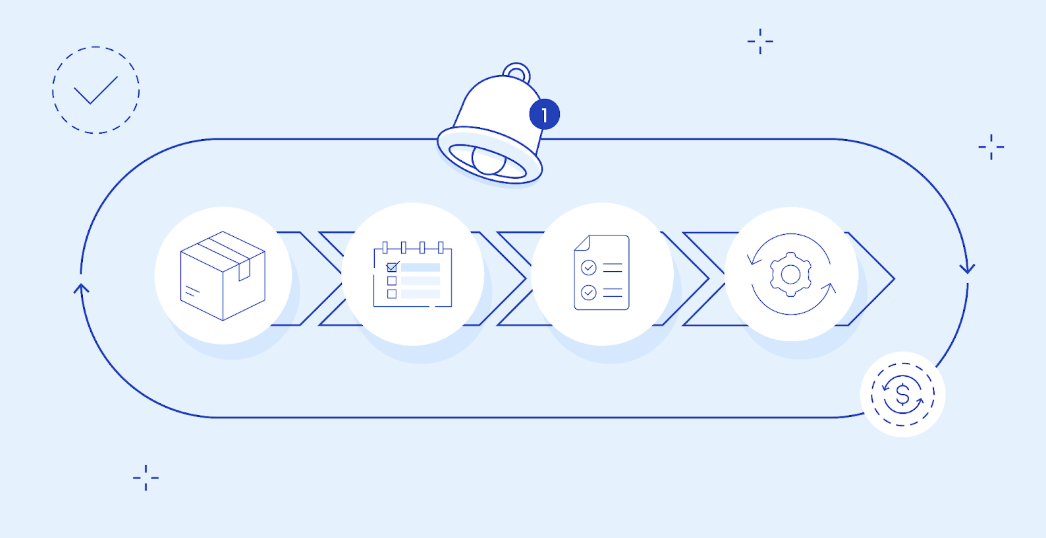
Lease management is where these cues make the biggest difference, Chris says. “If you’re not careful, contracts can lapse because you’re focused on the next deal. That’s why we build in renewal triggers right when the lease is signed. Hardfin flips renewals from a risk into a growth driver: a moment to reconnect with customers, reaffirm value, and build momentum.”
Every notification is logged in a permanent audit trail, giving Artyc the traceability to resolve issues quickly, prove compliance when needed, and ensure handoffs don’t slip through the cracks. “Our customers have a million things on their plates,” Chris adds. “Alerts allow them to stay focused on their priorities while we quietly make sure everything runs on time.”
“A shipment goes out; we get the alert that it’s on its way, so the team knows to follow up. A unit arrives; we see it confirmed, and that’s our signal to schedule onboarding. A lease is nearing its renewal date; the system reminds us before it slips.”
Fast iteration unlocks future-ready operations
Hardfin’s product momentum mirrors Artyc’s own: fast, iterative, and grounded in real operational feedback. “It’s amazing how quickly the team innovates,” Chris reflects. “We’ll review what we need, and by the next sprint they’ve already built new capabilities. It feels like true co-development.”
That speed stems from more than a product roadmap; it’s powered by Hardfin’s ability to learn across a growing network of HaaS companies. Artyc benefits not only from its own requests but from the shared intelligence of the entire peer group. “Sometimes Zack [Kimball, Hardfin's CEO] will mention a feature they’ve built for another company and I’ll think: that’s exactly what we’ll need next year,” Chris says. “That shared learning lets us move incredibly fast.”

Looking ahead, Chris sees even more potential in the platform. With richer data, Artyc plans to forecast demand with greater precision—a critical step as volumes rise and new markets come online. The same visibility that drives today’s operations will soon support predictive planning, smarter inventory allocation, and earlier insight into when and where new capacity will be needed.
As Artyc scales, that foundation becomes essential. The team is launching new products, expanding across the Americas, and now into Europe. “The name of the game is efficient scaling,” Chris emphasizes. “We're building optimized workflows into Hardfin now so the data flows with us. That will mean better dashboards, sharper analysis, and more effective management without adding overhead.”
“It's amazing how quickly the Hardfin team innovates. We’ll review what we need, and by the next sprint they’ve already built new capabilities. It feels like true co-development.”
Hardfin handles complexity so Artyc can focus on customers
Without Hardfin, keeping the model running would be a headache, Chris admits. “We'd be juggling spreadsheets, custom databases, or bloated tools that weren't built for us. Instead, we can focus on solving customer problems.”
That operational focus matters because Artyc’s entire model depends on precision at scale. (As a public benefit corporation, the company’s goal is to reduce waste at every stage of the cold chain.) Every cooler must be tracked, reused, refurbished, and eventually recycled, while maintaining unit-level profitability and compliance.
Hardfin makes that circular model viable without the overhead that typically bogs down asset-intensive operations. Customers get reliable service, backed by verified records. Regulators get clear audit trails, proving compliance. Hardfin provides the infrastructure that makes precision, profitability, and scale possible for every company built on hardware.
“The platform ensures we don’t just keep pace with growth, but use it to multiply our impact,” Chris adds. Every cycle reinforces the model: assets stay in circulation longer, data gets richer, and operations grow more efficient without adding headcount or complexity. Together, Artyc and Hardfin are proving what the next generation of HaaS can look like: scalable, profitable, and built to last.